
We’ve all been there. You’re driving down Route 40 or navigating the backroads near Lums Pond, minding your own business, when suddenly: WHAM. You didn’t see it until it was too late. That deep, jagged pothole just gave your car the ultimate wake-up call.
If you live in Bear, DE, you know that our roads can be a bit of a minefield, especially after a rough winter or a heavy rainy season. While that initial “thud” is enough to make your heart skip a beat, the real damage usually starts happening after the impact. Potholes are the natural enemy of your car’s suspension and wheel alignment. If things get knocked out of place, you aren’t just looking at a bumpy ride; you’re looking at a fast track to bald tires and expensive repairs.
At ASAP Automotive & Transmission, we’ve been helping our neighbors stay on the road since 1966. We’ve seen every kind of pothole damage imaginable. We believe in being honest with our customers: sometimes a pothole hit is harmless, but other times, it’s a silent killer for your vehicle’s health.
Here is our straightforward, 5-step guide to checking your alignment after a run-in with a pothole, designed specifically for our Bear drivers who want to save their tires and their hard-earned money.
Why Potholes are a Nightmare for Your Alignment
Before we dive into the steps, let’s talk about what’s actually happening under your car. Your vehicle’s suspension system is a complex network of components designed to keep your tires flat on the road and provide a smooth ride. When you hit a pothole, the force of that impact travels through the tire, into the wheel, and straight into the suspension.
Consequently, this force can bend tie rods, damage struts, or simply knock the fine-tuned angles of your wheels out of spec. This is where the term wheel alignment Bear DE comes into play. Alignment isn’t about the wheels themselves; it’s about adjusting the suspension components so the tires are angled correctly. When these angles are off by even a fraction of an inch, your tires start to drag instead of roll, leading to rapid wear and poor fuel economy.
Step 1: Perform an Immediate Visual Inspection
The moment it is safe to do so, pull over and take a look. You don’t need to be an ASE certified technician to spot the obvious signs of trouble.
Walk around your car and check the specific tire that took the hit. You are looking for:
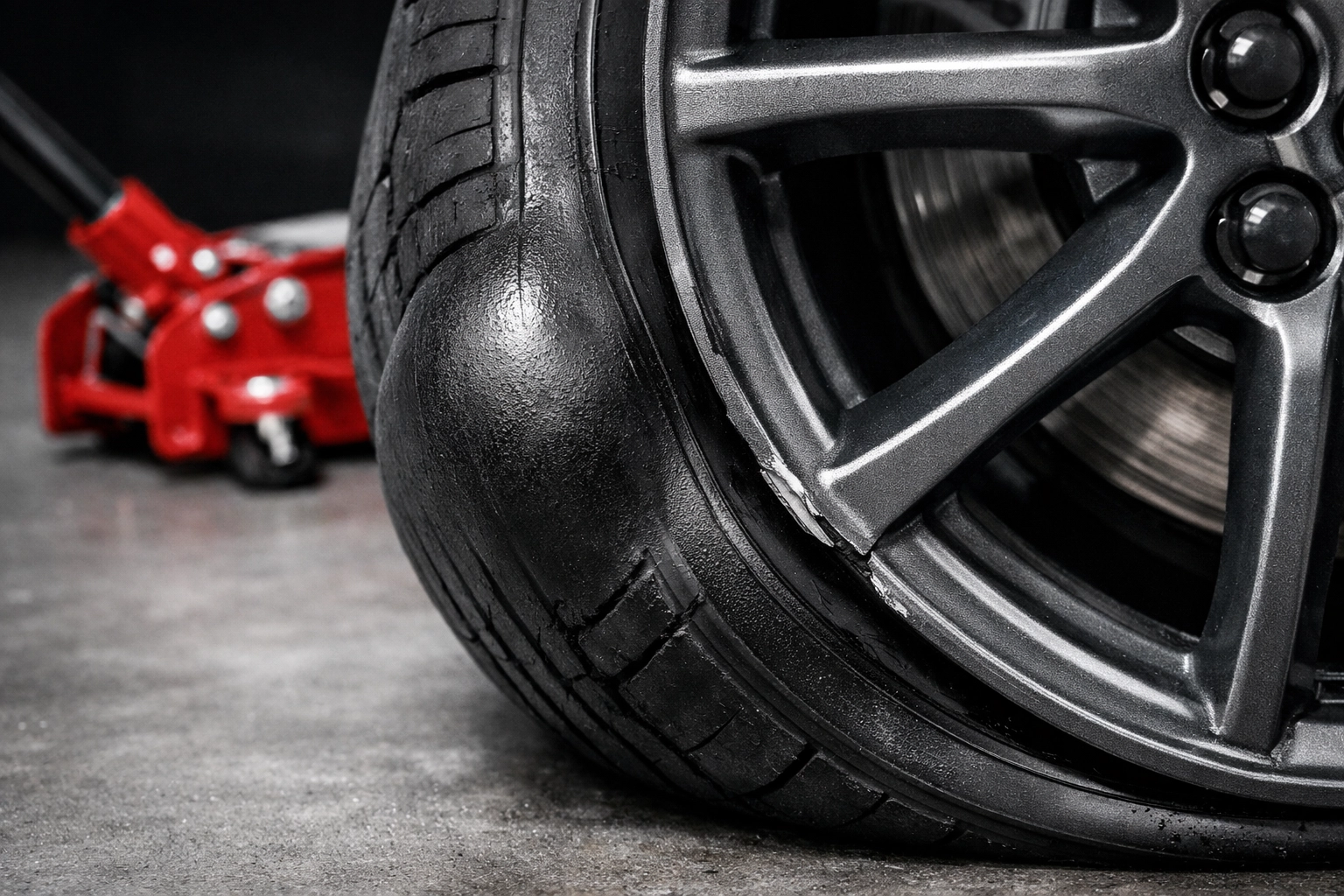
- Bubbles or Bulges: If you see a “goose egg” on the sidewall of the tire, the internal structure is compromised. This is a blowout waiting to happen.
- Bent Rims: Look at the edge of the metal wheel. If it’s dented or flattened, it can prevent the tire from sealing correctly.
- Visible Leaks: Check for any fluid leaking near the wheel area, which could indicate a blown strut or a damaged brake line.
If you see a bent rim or a bulging tire, don’t wait. You need an immediate automotive repair service to ensure the car is even safe to drive home.
Step 2: Monitor Your Tire Pressure Over the Next 48 Hours
Sometimes the damage isn’t visible right away. An impact can create a “pinhole” leak or break the bead (the seal between the tire and the rim) just enough to let air escape slowly.
Additionally, many modern cars will trigger the Tire Pressure Monitoring System (TPMS) light if a tire loses just a few pounds of pressure. Don’t just fill it back up and forget it. If that light comes back on a day or two later, the pothole definitely left its mark. Consistently low pressure is one of the quickest ways to ruin a tire’s internal structure, making a replacement inevitable.
Step 3: The “Straight Edge” Steering Test
Once you’re back on the road: ideally on a flat, straight stretch of highway like a quiet part of Route 1: pay close attention to your steering wheel.
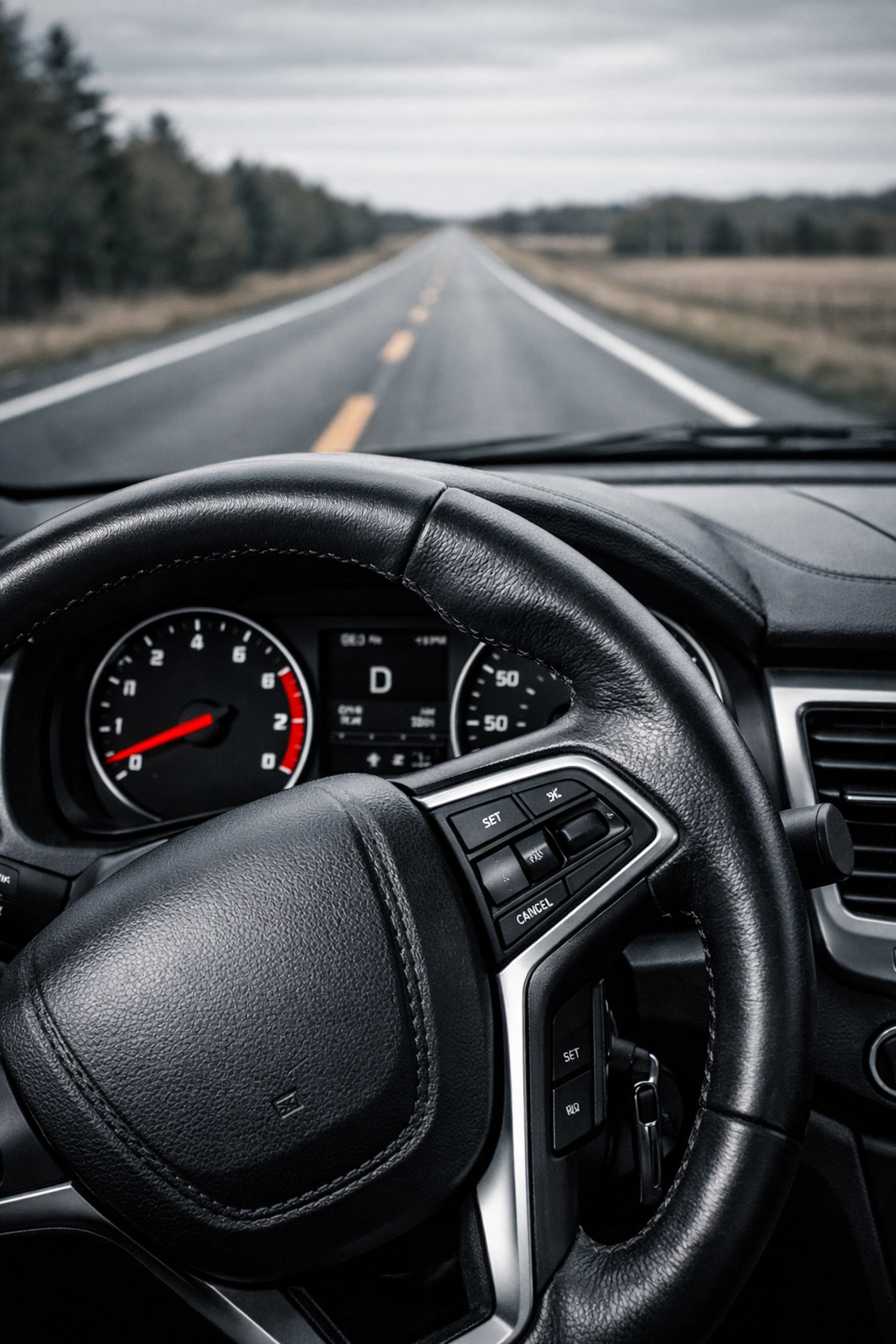
When you are driving straight, is your steering wheel actually centered? If the logo on your wheel is tilted to the left or right while the car is moving in a straight line, your alignment is definitely out of whack. Moreover, notice if the car “pulls” to one side. If you find yourself constantly fighting the wheel to stay in your lane, the pothole has likely altered your “toe” or “camber” angles.
Ignoring a pulling sensation doesn’t just make driving annoying; it puts unnecessary stress on your steering rack and causes your tires to wear out in a matter of weeks rather than years.
Step 4: Listen Closely for New “Character” Noises
Your car has a way of talking to you, and after a pothole hit, it might start screaming. New noises are rarely a good sign.
As you drive over smaller bumps or turn corners, listen for:
- Clunking or Bangs: This usually suggests a broken suspension component, like a ball joint or a stabilizer link.
- Squealing or Chirping: If your tires are misaligned, they might literally “scrub” against the road, creating a faint squealing sound even at low speeds.
- Vibrations: A vibration in the steering wheel often means you’ve lost a wheel weight or bent a rim, while a vibration in the seat might indicate rear-end damage.
In contrast to a simple alignment issue, these noises often point to structural damage that requires advanced vehicle diagnostics to pinpoint.
Step 5: Check for “Scrubbing” and Uneven Wear
This step requires a bit of patience. You might not see uneven wear five minutes after hitting a pothole, but you will see it within a week or two.
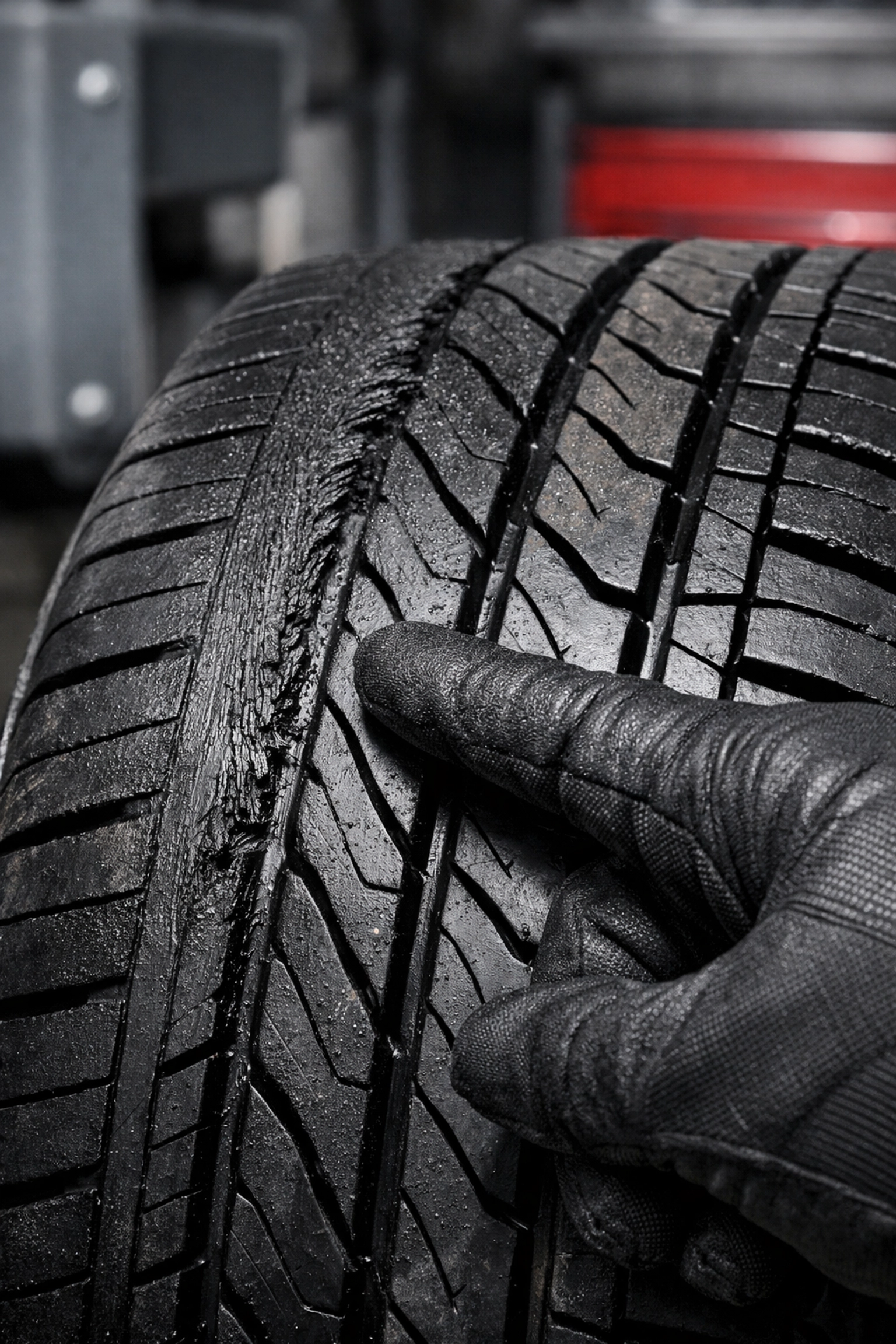
Run your hand across the tread of the tire (be careful of any exposed wires if the tire is very old!). Does it feel smooth in one direction but rough like a hacksaw blade in the other? This is called “feathering,” and it’s a classic sign of a bad wheel alignment Bear DE.
If you notice the inside edge of your tire is wearing down significantly faster than the outside, your camber is off. Once a tire develops an uneven wear pattern, it can be very difficult to “save” it, even after an alignment. That’s why catching it early is the best way to keep your money in your pocket.
Why You Should Choose a Pro for the Final Word
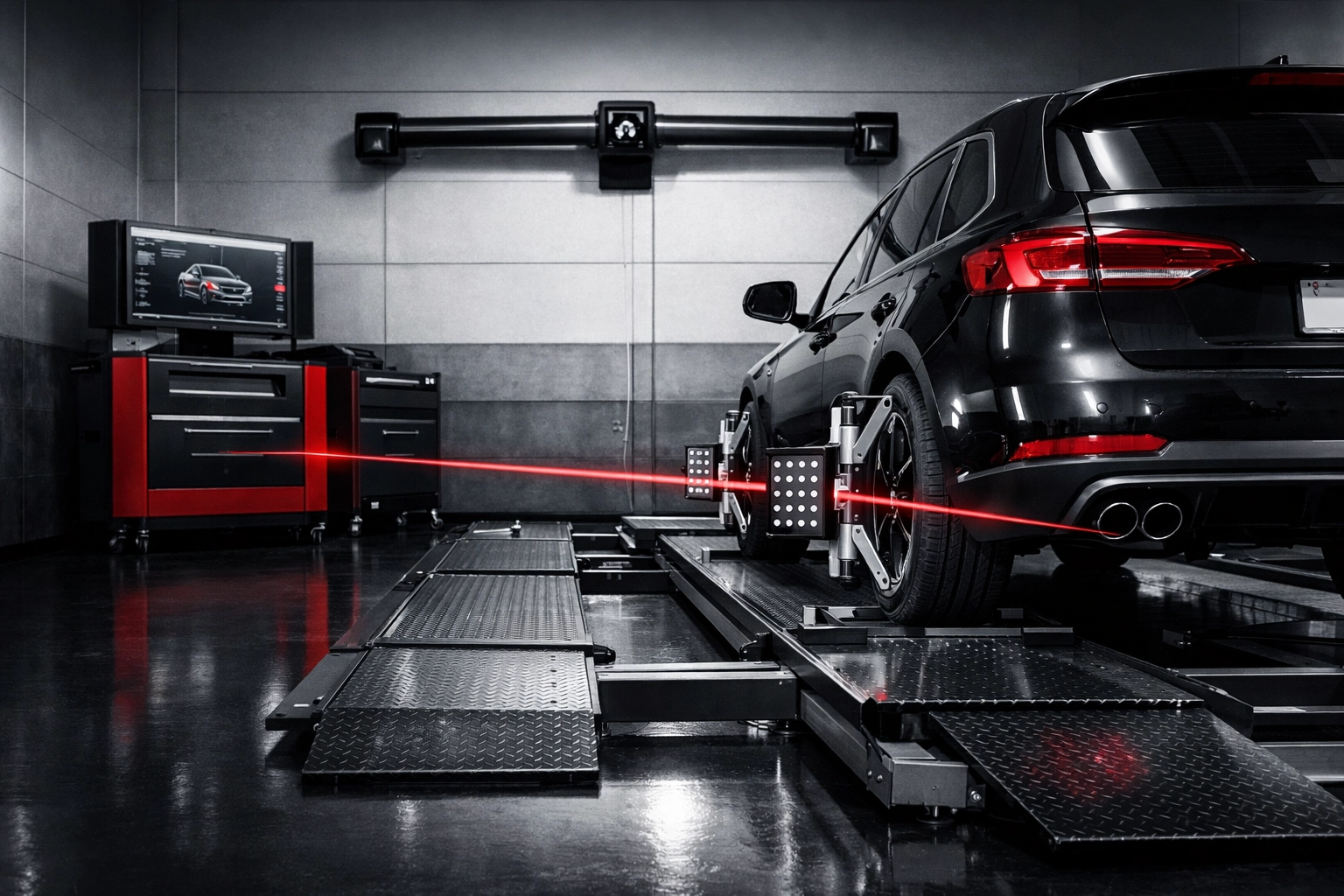
While these five steps help you identify the symptoms, fixing them requires specialized equipment. At ASAP Automotive & Transmission, we utilize precision alignment racks that measure your vehicle’s angles down to the millimeter.
Our team of ASE certified technicians doesn’t just “set it and forget it.” We perform a comprehensive inspection of your entire steering and suspension system. Why? Because performing an alignment on worn-out parts is like building a house on a cracked foundation: it’s just not going to hold. We’ve been the reliable auto repair shop in Bear, DE for over 50 years because we tell you exactly what you need, and more importantly, what you don’t need.
The Cost of Neglect vs. The Cost of Care
Are you wondering if you can just “wait and see”? We understand the temptation. However, let’s look at the math. A professional wheel alignment is a relatively small investment. In contrast, a full set of four new tires for a modern SUV or sedan can easily cost $800 to $1,200.
If your alignment is off, you could destroy those tires in less than 5,000 miles. Additionally, a misaligned car has higher rolling resistance, meaning your engine has to work harder, which kills your fuel efficiency. In the end, being proactive is the most honest way to save money on car ownership.
Come See Us at ASAP Automotive & Transmission
If you’ve had a rough encounter with a Delaware pothole and your car just doesn’t feel “right,” don’t let it stress you out. Whether it’s a simple oil change or a complex suspension rebuild, we’ve got it covered.
We’ve been a staple of the Bear community since 1966, providing honest, high-quality service that keeps families safe. We pride ourselves on clear communication and technical expertise. When you bring your car to us, you can relax with a coffee in our waiting area knowing that your vehicle is in the hands of pros who treat your car like their own.
Don’t let a pothole ruin your ride or your budget. Schedule an appointment today or contact us to chat about what’s going on with your vehicle. We’re here to help you get back on the road with confidence!