
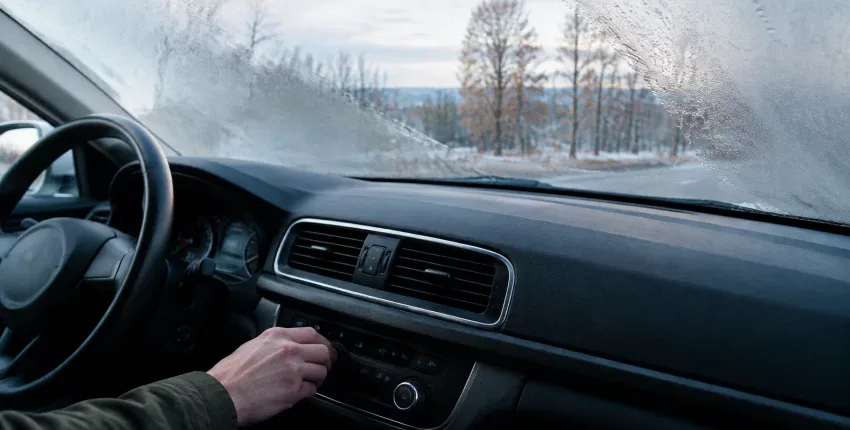
The first cold morning of November is a frustrating time to discover your car heater is blowing chilly air, or not moving air at all. A heater problem can be uncomfortable, but it can also affect how quickly you clear the windshield.
The cause might be as simple as a blower setting or something that needs a technician to diagnose. Here’s how the system works, what common symptoms can suggest, and which checks are safe to make yourself.
How your car’s heater makes warm air
In most gas-powered vehicles, the heater uses heat from the engine’s cooling system. As the engine warms, coolant circulates through a small radiator-like part behind the dashboard called the heater core. The blower motor pushes cabin air across the heater core, and air doors direct it toward the vents, floor, or windshield.
Several parts have to work together:
- Coolant carries heat from the engine to the heater core.
- The thermostat helps the engine reach and maintain its normal operating temperature.
- The heater core transfers heat to the air inside the cabin.
- The blower motor and its controls move air through the system.
- Blend doors and actuators direct air and adjust its temperature.
That’s why “car heater not working” can describe several different problems. Not every cause calls for the same repair, and a cold-air symptom alone doesn’t identify the failed part.
Common causes of lost heat, and what symptoms can suggest
Low coolant or air in the cooling system
If the coolant is low, or air is trapped in the system, hot coolant may not circulate through the heater core as it should. You might get cold air, heat that comes and goes, or heat that changes when the engine speed changes. Sometimes cabin heat is poor at idle but improves while driving.
Coolant should not regularly disappear. A low level can be a sign of a leak, and an air pocket may point to a recent repair or another cooling-system issue. You can check the reservoir level when the engine is completely cold, but finding the cause may require professional testing.
A thermostat stuck open
A thermostat stuck open can keep the engine from warming up properly. The temperature gauge may stay lower than usual, and the cabin may take a long time to get warm or never feel comfortably heated.
You can note whether the gauge reaches its usual position during a normal drive. A technician can confirm whether the thermostat is operating correctly and replace it if needed. A thermostat stuck closed is a different problem: it can cause the engine to overheat. If the temperature gauge rises into the danger range, pull over safely and shut off the engine.
A failed blower motor or blower control
If you have little or no airflow, even after adjusting the temperature, the issue may be in the blower motor or its electrical circuit. A resistor or control module can also fail. One clue is a fan that works only at certain speeds, though the exact pattern varies by vehicle.
Try each blower setting while parked. If the fan is silent, unusually noisy, or works only intermittently, a technician can test the motor, controls, wiring, and related components. Don’t assume a lack of airflow means the heater core is the problem.
A clogged heater core
A restricted heater core may not transfer enough heat into the cabin. The vents may blow with normal force but stay cool, or the heat may be inconsistent. Buildup inside the cooling system can contribute to a blockage.
Diagnosing the core involves checking coolant flow and the rest of the system. Heater-core work can require substantial dashboard access, so it’s generally not a sensible first DIY repair. A shop can test the system before recommending cleaning, repair, or replacement.
A blend-door or actuator fault
If the airflow is strong but the temperature doesn’t change when you move the control from cool to warm, a blend door or its actuator may not be moving correctly. You may also hear clicking or tapping behind the dashboard, but noise alone doesn’t confirm the cause.
A technician can check whether the doors respond to the controls and determine whether the issue is mechanical, electrical, or related to the control panel.
What you can safely check yourself
Start with simple observations rather than taking components apart. For coolant checks, follow your owner’s manual and work only when the engine is fully cold.
- Check the coolant reservoir level. Park on level ground and look at the markings on the overflow reservoir. Do not remove a radiator or pressure cap. If the reservoir is empty or the level keeps dropping, arrange an inspection instead of repeatedly topping it off.
- Try each blower speed. Notice whether airflow is absent, weak, noisy, or limited to certain settings.
- Test the front defroster. Check whether air reaches the windshield and whether it becomes warm. If the glass won’t clear well enough for safe driving, don’t set off hoping it will improve.
- Pay attention to odors and fogging. A sweet coolant smell inside the cabin, especially with persistent windshield fogging or a filmy residue, can indicate a coolant leak. It is not a harmless smell to ignore.
Never open a hot cooling system. It can be pressurized, and escaping coolant or steam can cause serious burns. If the temperature gauge climbs abnormally, you see steam, or the cabin heater goes cold while the engine overheats, stop in a safe place and turn off the engine. Let the vehicle cool and arrange help rather than continuing to drive.
For a seasonal refresher on checking coolant and other basics, see our Fall Car Care Month checklist.
When it’s time to have a shop diagnose it
A shop can test for coolant leaks, check system pressure, confirm that the thermostat is regulating temperature, and assess coolant circulation through the heater core. If airflow is the problem, technicians can inspect the blower motor and its electrical controls. If warm air isn’t reaching the cabin despite normal engine temperature, they can check the blend doors and actuators.
Avoid trying to flush or dismantle a heater core based on symptoms alone. Incorrect coolant, an improper refill or bleeding procedure, or a missed leak can leave the underlying problem unresolved.

In Bear, Delaware, ASAP Automotive & Transmission’s heating services can help identify why your heater isn’t working and what repair makes sense. The shop has served the community since 1966, and its ASE certified technicians can check the heater and related cooling-system components. Most repairs are backed by a 3-year/50,000-mile warranty. Early bird and after-hours drop-off are also available.
Get the heat, and visibility, back
A heater that blows cold air may point to low coolant, a thermostat issue, an airflow fault, or a problem behind the dashboard. Check only what’s safe, take overheating or coolant-leak symptoms seriously, and have persistent problems properly diagnosed. If your car heater isn’t working in Bear, DE, contact ASAP Automotive & Transmission to schedule an inspection.