
A check engine light can be unsettling, especially when it starts flashing while you are driving around Bear, Delaware. The good news is that the light does not automatically mean your engine is ruined. However, a flashing check engine light should never be treated the same way as a solid one.
A solid light usually means your vehicle’s computer has detected a problem and stored a diagnostic trouble code. A flashing light typically signals an active misfire or another serious fault that could damage the catalytic converter and other components if you continue driving.
Knowing the difference can help you make a safe, informed decision instead of guessing. Here are five urgent reasons a check engine light may flash and what to do next.
Solid vs. Flashing Check Engine Light: Why It Matters
A solid check engine light generally means the vehicle needs attention soon, but it may be safe to drive a short distance if the car is running normally. Common causes include an emissions fault, oxygen sensor problem, evaporative emissions leak, or loose gas cap.
You should still arrange a check engine light diagnosis rather than ignoring the warning. A small issue can affect fuel economy or eventually lead to more expensive repairs.
A flashing check engine light is more urgent. It often indicates that the engine is actively misfiring. When a cylinder fails to burn its air-fuel mixture correctly, unburned fuel can enter the exhaust and overheat the catalytic converter. Continued driving may turn a manageable ignition or fuel problem into a much larger repair.
As AAA explains, the way your vehicle is behaving matters. If the engine is shaking, losing power, stalling, or producing unusual smells, stop driving as soon as it is safe and arrange professional help.
1. Failed Spark Plugs or Ignition Coils
One of the most common reasons for a flashing check engine light is an ignition problem. Your engine needs a strong, properly timed spark in each cylinder. Spark plugs and ignition coils are responsible for creating that spark.
When a spark plug is worn, fouled, cracked, or damaged, the affected cylinder may misfire. A failing ignition coil can cause the same symptom. You may notice:
- Shaking or vibration at idle
- Hesitation when accelerating
- Reduced engine power
- Poor fuel economy
- A rough or uneven engine sound
A single worn spark plug may begin as an occasional performance issue, but a severe misfire can cause the check engine light to flash. Driving aggressively or continuing to operate the vehicle for an extended time increases the risk of catalytic converter damage.
A technician can use diagnostic trouble codes, live engine data, and additional testing to determine whether the problem is a spark plug, coil, wiring issue, or something else. Replacing parts based only on a code is not always the best approach, which is why accurate testing matters.
2. Fuel Injector or Fuel Delivery Problems
An engine also needs the correct amount of fuel to run properly. If a fuel injector is clogged, stuck, leaking, or electrically faulty, one or more cylinders may receive too much or too little fuel.
Problems elsewhere in the fuel system can also contribute to a misfire. These may include low fuel pressure, a weak fuel pump, a restricted fuel filter, or an electrical issue affecting the injectors.
Fuel-related problems may cause:
- Rough running under acceleration
- Stalling or difficult starting
- A strong fuel odor
- Noticeably reduced power
- A flashing warning light
A strong fuel smell combined with a flashing check engine light is a reason to stop driving and seek help. Unburned fuel is not only harmful to the catalytic converter; it can also create an unsafe condition if a leak is present.
A professional auto repair shop near me can check fuel pressure, injector operation, electrical signals, and related engine data before recommending a repair. This helps avoid replacing an expensive fuel component when the real cause is a wiring fault or another issue.
3. A Serious Vacuum or Air Intake Leak
Your engine computer constantly adjusts fuel delivery based on the amount of air entering the engine. A large vacuum leak or damaged air intake component can disrupt that balance and cause the engine to run too lean.
A small vacuum leak may turn on a solid check engine light. A larger leak can cause poor combustion, rough running, and misfires severe enough to make the light flash.
Possible signs include:
- High or unstable idle
- Hissing sounds from under the hood
- Stalling when stopping
- Slow or uneven acceleration
- Rough engine performance
Cracked vacuum hoses, a damaged intake boot, a failed intake manifold gasket, or a disconnected hose can all create air-fuel problems. These faults are not always visible during a quick glance under the hood.
Finding an air leak may require smoke testing, fuel-trim analysis, and a review of live data. Proper check engine light diagnosis focuses on identifying why the engine is misfiring: not simply clearing the warning light.
4. Low Compression, Timing, or Other Mechanical Failure
Sometimes the ignition and fuel systems are working correctly, but the engine still cannot complete combustion because of a mechanical problem.
An engine cylinder needs adequate compression and properly timed valve operation. A damaged valve, worn timing component, head gasket problem, or internal engine wear can prevent a cylinder from operating as it should.
Mechanical issues may be accompanied by:
- Persistent rough running
- Loss of power
- Unusual tapping or knocking sounds
- Difficult starting
- Excessive exhaust smoke
- Coolant loss or overheating
These problems are less straightforward than a worn spark plug, but a flashing check engine light may be the first clear warning. Repeatedly replacing ignition or fuel parts without testing engine compression can waste money and delay the correct repair.
A qualified technician may perform compression or leak-down testing, inspect timing data, and look for signs of internal damage. The goal is to give you a clear explanation of the condition of the engine and discuss repair options honestly.
5. Catalytic Converter Damage or a Severe Emissions Fault
The catalytic converter helps reduce harmful emissions in your vehicle’s exhaust. It can be damaged by long-term misfires, excessive fuel, overheating, or physical failure.
In many cases, a catalytic converter efficiency problem will turn on a solid check engine light. However, a severe misfire that threatens to overheat the converter can cause the light to flash. This is why continuing to drive with a blinking warning can become expensive quickly.
You may also notice:
- Sluggish acceleration
- A sulfur or rotten-egg smell
- Excessive heat underneath the vehicle
- Reduced fuel economy
- Rattling from the exhaust
The converter itself may not be the original cause. For example, an ignition coil or injector problem may send unburned fuel into the exhaust and damage the converter over time. Replacing the converter without correcting the underlying misfire could lead to another failure.
A complete diagnostic inspection should check the engine, exhaust, fuel, and ignition systems together.

What To Do When the Check Engine Light Is Flashing
If the light begins flashing while you are driving:
- Reduce your speed and avoid hard acceleration or high engine speeds.
- Move to a safe location as soon as possible.
- Pay attention to shaking, smoke, fuel smells, overheating, or loss of power.
- If the light continues flashing or the vehicle runs poorly, shut it off and arrange a tow.
- Do not rely on clearing the code or disconnecting the battery as a repair.
If the flashing light appears alongside an oil pressure warning, temperature warning, loud knocking, visible smoke, or severe power loss, do not continue driving. Those symptoms may indicate additional damage or an immediate safety concern.
If the light stops flashing after a restart, the problem still needs attention. A temporary improvement does not prove that the fault is gone.
How Professional Check Engine Light Diagnosis Helps
A diagnostic scan is an important first step, but a trouble code is not always a complete diagnosis. For example, a misfire code may identify a cylinder without identifying whether the cause is a spark plug, ignition coil, injector, vacuum leak, or internal engine problem.
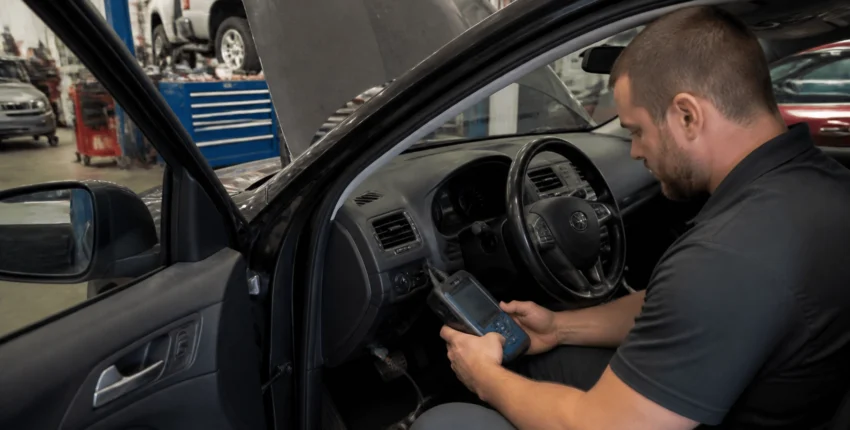
At ASAP Automotive & Transmission, ASE-certified technicians use professional diagnostic equipment to read codes, review live data, and test related components. That approach helps identify the root cause before repairs are recommended.
Drivers in Bear and nearby Delaware communities can also review the shop’s full range of automotive repair services for maintenance, engine work, electrical diagnostics, brakes, tires, air conditioning, and transmission repairs.
A Flashing Light Is Urgent, but You Do Not Have To Guess
A solid check engine light usually means you should schedule service soon. A flashing check engine light means the engine may be misfiring right now, and continuing to drive can cause additional damage.
The safest response is to reduce stress on the vehicle, stop when it is safe, and arrange a professional inspection. If you are searching for auto repair near me in Bear, Delaware, contact ASAP Automotive & Transmission for honest guidance and accurate diagnostics. Our experienced team can explain what the warning means, what needs immediate attention, and which repairs can wait.