
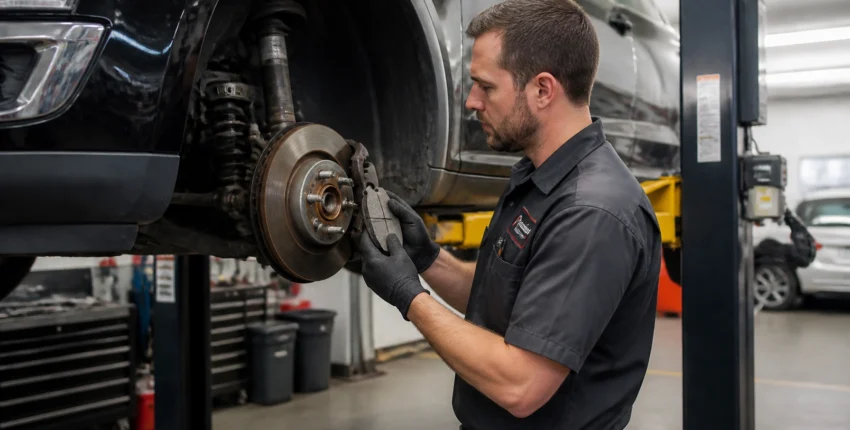
Driving down Route 40 during rush hour in Bear, Delaware, requires your full attention: and it requires absolute confidence in your vehicle’s stopping power. Whether you are commuting past local shopping centers, heading toward Wilmington, or running weekend errands with your family, your car’s braking system is your single most important safety feature.
Yet, because brake wear happens gradually over thousands of miles, it is easy to overlook subtle changes in how your vehicle responds. Many drivers in Bear tend to normalize small noises or a slightly softer pedal until a minor issue turns into an expensive and dangerous problem. At ASAP Automotive & Transmission, we believe in being entirely honest and upfront with our community. Understanding the early warning signs of brake trouble can save you money, protect your passengers, and keep you safe on Delaware roads.
Here are five critical brake warning signs you should never ignore, and what they mean for your vehicle.
1. High-Pitched Squealing or Squeaking
Have you ever rolled down your window at a red light in Bear and heard a sharp, metallic squeal every time you pressed the brake pedal? That sound is not accidental; it is engineered intentionally.
Most modern brake pads are manufactured with a built-in metal indicator called a wear tab. When your brake pads wear down to a certain thickness: usually about a quarter-inch remaining: this tab rubs against the rotor, creating a high-pitched squealing noise. It serves as your vehicle’s polite early-warning system telling you that your pads are getting thin.
Ignoring this sound is tempting when the brakes still seem to stop the car, but letting it go too long means the friction material will completely disappear, leading to much more severe damage. Scheduling a timely brake check when you first hear that squeak lets you replace just the pads rather than buying expensive new rotors as well.
2. Grinding or Growling Noises When Stopping
If that high-pitched squeak is ignored for too long, it graduates into something far more alarming: a harsh grinding or low growling noise.
This sound means your brake pads have worn completely away down to the bare steel backing plate. When you press the brake pedal now, metal is grinding directly against metal. Not only does this drastically reduce your vehicle’s stopping distance: putting you and everyone else on Route 40 at risk: but it also scores, gouges, and ruins your brake rotors.
When metal-on-metal contact occurs, what could have been a routine pad replacement transforms into a complete rotor and pad overhaul. If you hear a grinding noise, it is time to pull over safely and arrange for professional brake repair in Bear, DE immediately.
3. A Soft, Spongy, or Low Brake Pedal
When you step on the brake pedal, it should feel firm and responsive. If your foot sinks noticeably closer to the floorboard than usual, or if the pedal feels mushy, spongy, or lacks its usual resistance, you are experiencing a hydraulic issue.
A soft or sinking pedal often points to air trapped inside the brake lines, a fluid leak, worn-out master cylinder seals, or deteriorating brake hoses. Because hydraulic systems rely on constant pressure to transfer force from your foot to the wheels, any compromise in that system means your brakes cannot exert maximum clamping force.
For drivers in Bear, navigating stop-and-go traffic with a spongy pedal is a gamble you don’t want to take. If your pedal feels different overnight, don’t wait for it to fail completely: have a certified technician inspect your hydraulic lines and fluid levels right away.

4. Vehicle Pulling to One Side When Braking
Does your car veer to the left or right whenever you apply the brakes? This directional pull can make your steering wheel feel like it is fighting you, especially at higher speeds on local highways.
A pulling sensation during braking usually indicates uneven wear across your brake pads, a stuck or seized brake caliper, or a collapsed brake hose that is restricting fluid flow to one side of the vehicle. When one wheel is braking effectively while the other lags behind, your car naturally pivots toward the stronger side.
In emergency stopping situations, this pull can cause you to drift out of your lane before you can react. Diagnosing and correcting caliper issues early ensures your car stops in a straight, predictable line every single time. To learn more about how expert technicians tackle these issues, check out our insights on brake repair techniques every driver should know in Bear, DE.
5. Steering Wheel Vibration or Pulsation
If your brake pedal or steering wheel shakes, vibrates, or pulsates back and forth when you press the brakes down from highway speeds, you likely have warped or unevenly worn brake rotors.
Over time, heavy braking, towing, or driving through deep puddles can cause rotors to develop microscopic high and low spots. As the brake pads clamp down on an uneven surface, that variation translates directly through the suspension and up into your hands on the steering wheel. While your car may still stop, the vibration compromises stability and indicates that your rotors need to be resurfaced or replaced.
Trustworthy Brake Care for Drivers in Bear, Delaware
Maintaining your brakes isn’t just about avoiding costly garage bills: it is about peace of mind for you and your family. At ASAP Automotive & Transmission, we believe in honest communication, transparent pricing, and expert craftsmanship backed by our commitment to keeping our community safe.
If you’ve noticed any of these five warning signs around Bear, don’t wait until a small squeak becomes a major safety hazard. Visit our shop or reach out to our team today for honest advice and reliable service you can count on.